


We’re sure you’ve heard it all before but we’re here to tell you just how important tool and equipment lubrication is – for a number of reasons!
Let’s start off with what a lubricant actually is. So, a lubricant is a substance designed to reduce friction, heat and wear when introduced as a film between solid surfaces. Using the correct lubricant and making sure you stay on top of your maintenance really helps to maximise the life of your tools and equipment which in turn helps you to save money, time, manpower thus making operations more efficient and more reliable.
As we mentioned, choosing the correct lubricant for your task is essential but so is choosing a high quality product that you can trust. Regardless of the task, WD-40 Specialist Lubricants are backed by science and results to give you effective lubrication. WD-40 Specialist Anti-Friction Dry PTFE Lubricant improves the life of everything from tools to machinery to car parts. Best of all, it’s non-stick, leaving behind a dry film that resists dirt, dust and oil. The Specialist Lawn & Garden General Use Lubricant provides a solution for gardening tools that are often exposed to the elements by providing excelling lubrication, reducing friction and protects your tools from moisture.
The Importance of Equipment Lubrication
There’s no ifs or buts about it – lubrication is crucial to maintaining the integrity and reliability of your tools. As such, equipment lubrication should be carried out regularly and with care.
Often tool and equipment lubrication is overlooked and considered an ‘added benefit’ that isn’t really all that important for the overall condition of your equipment. In reality, lubricants are substances which play a major role in bearing and machinery function and longevity by reducing wear of moving parts, reducing friction between rotating and stationary parts, absorbing shock and reducing operating temperatures. Lubricating your tools and equipment can also help to minimise corrosion of metal surfaces, keep contaminants out of the system as well as seal and protect the components.
Why Do We Need Lubrication for Tools and Equipment?
Lubrication is essential for keeping your tools and equipment working in top condition for a number of reasons. The primary reasons being:
Reducing Friction
The use of a lubricant reduces the heat generated when two surfaces are in motion. It smoothes the process by creating a film between the two surfaces which in turn reduces friction and improves performance and efficiency.
Creating Film Between Surfaces
Lubricants control friction and wear on your tools and equipment by forming a film that separates contacting surfaces which consequently reduces energy consumption and prolongs machine life.
Protecting Against Corrosion
Proper lubrication through regular, preventative maintenance will provide a range of benefits to ensure reliability of your tools and equipment. Among these advantages is the protection from causes of corrosion, including water and rust.
Preventing Equipment Wear
To prevent wear, lubricants are specially formulated to form a low-friction, protective layer on the wear surface ultimately creating a barrier between the layers of metal on your tools and equipment.
Repel Water on Tools
Designed for high temperatures, silicone is the perfect solution for keeping your power tools working in top condition and repels water.
Cooling by Dissipating Heat from Equipment Surfaces
The load-carrying or power-transmitting capacity of many machine parts if decisively affected by the maximum temperatures that occur in the source of frictional heat. Lubricants cool by dissipating heat from equipment surfaces.
Lubrication Ensures Machine Reliability
Lubrication practices have a direct affect on the reliability of your tools and equipment. When a lubricant is working effectively in a machine with no chemical degradation and with limited contamination within it, wear will be reduced and reliability will be improved.
How Do I Use Equipment Lubrication?
Lubrication has a direct affect on tool and equipment reliability. If you have a good equipment lubrication strategy, you will improve your tool and equipment uptime. Firstly it’s important to understand which type of lubrication you need.
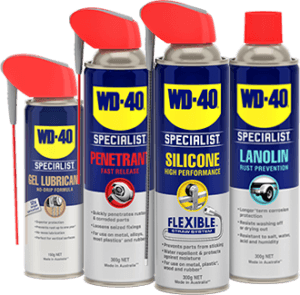
The WD-40 Specialist Range includes 1 silicone product – High Performance Silicone and 1 PTFE product – Anti-Friction Dry PTFE Lubricant which are both great for different usages.
WD-40 Specialist Anti-Friction Dry PTFE is a spray lubricant that improved the life of everything from tools and machinery to car parts. Formulated with PTFE, polytetrafluorethylene, also known as Teflon. This makes it non-stick, leaving behind a dry film that resists dirt, dust and oil. With the smart straw applicator, you can either use for hard to reach areas, or flip it down to use the wide angle spray for coverage on wider surfaces.
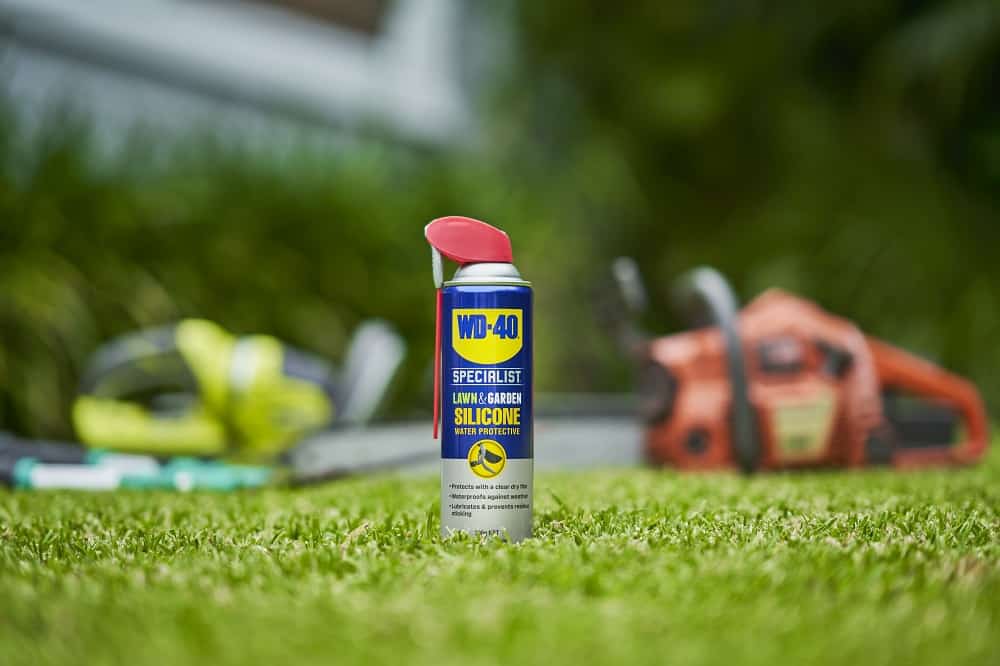
Specialist Water Protective Silicone from the WD-40 Specialist Lawn & Garden range is formulated to work well on all of your garden tools, including metal power and hand tools, as well as plastic runner and wood. This product works by forming a clear dry file, waterproofs against weather, lubricates and prevents residue sticking while helping parts run smoother.
The Different Lubrication Tools and Equipment Require
The most common application of a lubricant product is to reduce friction between surfaces. However not all lubricants are created equal and it’s important to ensure you choose the correct product for effective lubrication for your tools and equipment.
Here we’ll explore the most common kinds of lubricants, how they work, and when to use them.
Oils are thin liquids made up of long polymer chains, with additives for various extra properties. Oil lubricants are great for small spaces and for when you want to lubricate something without the resistance associated with using grease. On the other hand, using oil as a lubricant isn’t effective on surfaces that are exposed to dirt, dust or water which can eventually gum up and cause even more friction, or simply wash the oil away.
Greases are made by mixing oil and thickeners, such as Lithium-based soaps, and can also contains additional lubricating particles, such as graphite, molybdenum disulfide, or polytetrafluoroethylene (PTFE). They’re great to use on gears, bearings, chains and linkages and for when you need lubrication to stay put and stick to surfaces. They’re also great for sealing out contaminants like water and dust. On the other hand, grease lubricants can create too much resistance on fast-moving mechanisms and can be quite messy!
Dry Lubricants are made from lubricating particles like graphite, molybdenum disulfide, silicone or PTFE making them super slippery and great for reducing friction between surfaces. They’re also great to use on 3D printer rails, threaded rods, locks and hinges.
How Often Should I Lubricate Tools & Equipment?
Taking care of your tools means staying on top of your equipment lubrication to ensure they stay working in top condition for longer.
Not only does proper lubrication keep the mechanics of your tools and equipment running smoothly, it also decreases the chances of rust developing. As such, most tool and equipment manufacturers recommend that you regularly lubricate your tools and equipment, rather than waiting for them to seize up entirely. Lubrication on the metal portions on tools and equipment will do wonders for the longevity, ultimately repelling water, preventing dust and lubricating any moving parts.
Lubricate Your Equipment with WD-40
We’ve discussed the importance of tool and equipment lubrication, the different kinds of lubricants and when to use them. Regular maintenance and lubrication of your tools and equipment will ensure they stay working in top condition.
Try Water Protective Silicone from the WD-40 Specialist Lawn & Garden range on your tools that come into contact with water, plant residues or damp conditions. It’s a silicone based formula that repels water from mechanisms, joints, hinges and rotating blades to keep them running smoothly with minimal resistance.
Looking for a non-stick solution that leaves behind a dry film that resists dirt, dust and oil? Try WD-40 Specialist Anti-Friction Dry PTFE Lubricant to improve the live of everything from tools and machinery to car parts. It’s non-staining and because it dries quickly, it’s especially effective for people who work with parts that are exposed to the elements like sign writes, panel beaters, spray painters or anyone who works with plastic metal or glass.
